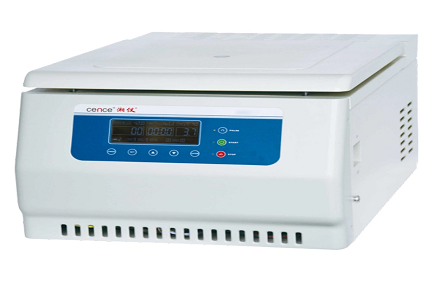
In 2026, PRP programmes in clinics and laboratories are under tighter pressure on all three dimensions simultaneously: consistent separation outcomes, faster patient throughput, and better protocol documentation to support quality management and clinical credibility. Variable platelet yield, hemolysis, and disrupted layer separation are not just technical problems — they translate directly into re-spins, delayed patient sessions, and outcomes that undermine confidence in the programme.
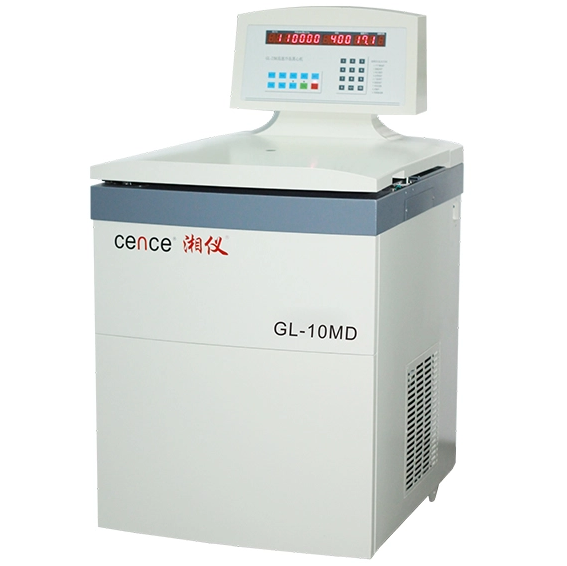
The equipment choice is a meaningful variable in this equation. A reliable blood centrifuge stabilises the spin profile, improves run-to-run repeatability, and reduces the process failures that cost clinical time. If you are evaluating a blood spinning machine for sale, the selection should be driven by process control capability — RCF accuracy, rotor stability, and braking profile — rather than maximum RPM.
How Centrifugation Determines PRP Quality
Understanding the separation mechanism clarifies why specific centrifuge parameters produce different outcomes — and why protocol definitions based on RPM alone are insufficient.
When a blood sample is centrifuged, components separate by density under centrifugal force. The layers that form in a standard whole-blood spin are:
| Layer | Component | Density |
|---|
| Bottom | Red blood cells (RBCs) | Highest |
| Middle (buffy coat) | White blood cells and platelets | Intermediate |
| Top | Platelet-poor plasma | Lowest |
PRP is typically collected from the platelet-rich zone just above the buffy coat or from the buffy coat layer itself, depending on the specific PRP protocol and kit system used.
The quality of this separation — and therefore the quality of the PRP collected — is determined by three centrifuge parameters:
RCF (×g): Relative centrifugal force is the true driver of separation. It is determined by both rotor speed (RPM) and rotor radius. Two centrifuges running at identical RPM generate different RCF if their rotor radii differ. PRP protocols should be defined by target RCF (×g), not RPM, to ensure consistent separation regardless of which centrifuge model is used.
Run time: Time determines how completely the separation resolves. Insufficient time yields incomplete separation and low platelet concentration. Excessive time can begin to pellet platelets into the buffy coat, reducing recovery.
Braking profile: How the centrifuge decelerates after the spin is complete is as important as the spin itself. Aggressive or abrupt braking disturbs the formed layers before the sample can be collected — mixing platelets back into the plasma or RBC fraction. Programmable soft-stop or gentle deceleration is essential for PRP quality preservation.

PRP consistency depends on controlled RCF, time, and gentle stopping to keep layers stable for collection.
Specifications That Determine Repeatable PRP Results
When evaluating a blood spinning machine for sale, the specifications below are the ones that directly affect protocol reliability and daily workflow performance.
Core Performance Specifications
| Specification | What to Confirm | Why It Matters for PRP |
|---|
| RCF range and accuracy | Confirm the centrifuge displays RCF (×g) and can be programmed in these units | Ensures protocol is defined and reproduced by RCF, not RPM conversion |
| Speed stability | Speed should be stable at the target setting, not drifting during the run | Speed drift causes inconsistent separation in the same run |
| Programmable time profiles | Store multiple protocol sets for different PRP kits or tube types | Reduces setup error; ensures consistent execution across operators |
| Rotor type | Fixed-angle rotor for standard blood tubes (most PRP workflows) | Swing-bucket adds complexity not typically needed for blood separation |
| Tube compatibility | Confirm the rotor accepts the specific blood collection tube sizes your PRP kit uses | Mismatched tube adapters create imbalance risk |
| Braking control | Programmable deceleration with soft-stop option | Critical for layer integrity; hard braking disrupts PRP layer |
Safety and Usability Features
| Feature | Function |
|---|
| Lid lock | Prevents opening during rotation; non-negotiable safety requirement |
| Imbalance detection | Automatically stops the run if load is unbalanced; protects rotor and operator |
| Clear HMI with protocol storage | Reduces operator error across multiple users; supports consistent protocol execution |
| Noise and vibration output | Important for clinical environments; high vibration also indicates mechanical wear risk |
Temperature Control
Standard PRP preparation does not require refrigerated centrifugation — most protocols run at ambient temperature. Confirm this against your specific protocol requirements. If any samples require temperature control (research applications, specific cell biology adjacent workflows), a refrigerated model is required, but for standard clinical PRP, ambient centrifugation is appropriate and lower cost.
Where Centrifuge Stability Affects Clinical Throughput
Blood centrifuge performance affects clinic throughput across three primary PRP application areas:
Orthopedics and Sports Medicine
This application typically requires repeatable high-quality PRP for joint injections and tissue regeneration procedures. The clinical schedule is structured — multiple patients per session day — which makes re-spins and equipment downtime directly disruptive. A centrifuge with reliable protocol execution and fast cycle time (typically 5–15 minutes per spin depending on protocol) keeps the session flow on schedule.
Aesthetics and Dermatology
PRP in aesthetics often involves same-day preparation and application, with little tolerance for failed runs. Consistent layer separation and platelet yield directly affect treatment outcome and patient satisfaction. This application also tends to involve multiple operators — making protocol storage and reproducible execution across staff particularly valuable.
Research and Lab Validation
Research workflows place the highest demand on documentation and protocol control. The ability to programme precise RCF values, log run parameters, and reproduce identical conditions across multiple runs is essential for valid data. Centrifuge calibration documentation may also be required for institutional or regulatory compliance.
Practical Throughput Impact
For a clinic running 8–12 PRP procedures per day, reducing the re-spin rate from 15% to 3% saves approximately one to two full procedure cycle times per day. Over a month, this represents meaningful recaptured clinical capacity from a single equipment decision.
How to Select the Right Blood Centrifuge for Your PRP Protocol
Step 1 — Define Your Protocol by RCF, Not RPM
Identify the RCF (×g) and run time specified by your PRP kit manufacturer or clinical protocol. If your protocol specifies RPM, convert to RCF using the rotor radius of the centrifuge you are evaluating. Confirm the centrifuge can accurately achieve and maintain this RCF.
Step 2 — Define Tube Type and Capacity Per Run
Identify the exact tube format used in your PRP kit: tube outer diameter, length, and volume. Confirm the centrifuge rotor accepts this tube with or without a specific adapter. Define the number of tubes per run required for your procedure volume.
Step 3 — Confirm Braking Profile Requirements
Your PRP protocol should specify the required deceleration profile. Confirm the centrifuge offers the braking control needed — typically a soft or gradual stop mode — and that this setting is available as a saved protocol parameter, not just a manual adjustment.
Step 4 — Confirm Physical and Infrastructure Requirements
Available bench space with required clearance for ventilation and safe lid opening
Electrical supply: voltage and amperage for the unit's rated power consumption
Placement in a clean clinical area that meets your facility's workflow and hygiene requirements
Noise output within acceptable range for patient-adjacent spaces
Step 5 — Procurement Best Practice
Request from any supplier: the rotor compatibility list for your specific tube formats, available protocol support or validated spin parameters for your PRP kit, warranty and local service terms, and calibration documentation options if required by your quality management system. Run a pilot validation with your actual tubes and protocol before committing to volume purchasing.
Total Cost of Ownership: Keeping the Blood Spinning Machine Reliable
The purchase price of a blood spinning machine for sale represents only part of the operational cost. The factors below determine whether the equipment delivers its expected return over time.
| TCO Driver | How It Accumulates | Management Approach |
|---|
| Downtime during clinic hours | Equipment failure stops procedures; backup is typically unavailable | Choose units with known reliability; confirm local service response time |
| Rotor inspection and replacement | Rotors have defined service lives; worn rotors are a safety and performance risk | Follow manufacturer inspection schedule; document run hours per rotor |
| Calibration drift | RCF accuracy can drift with rotor or bearing wear | Periodic speed/RCF verification against a calibrated standard |
| Cleaning and decontamination | Blood-contaminated surfaces require validated cleaning between runs | Confirm cleaning agent compatibility with rotor and chamber materials |
| Re-spin rate | Each re-spin consumes consumables, operator time, and patient schedule time | Track re-spin rate as a direct indicator of centrifuge performance consistency |
KPIs to Track Quarterly
Run success rate (successful separation without re-spin)
Re-spin rate per 100 runs
Maintenance events per quarter
Downtime hours attributable to centrifuge issues
FAQs
Q1: What is a blood centrifuge used for in PRP preparation?
A blood centrifuge applies controlled centrifugal force to a whole blood sample, separating its components by density into distinct layers: red blood cells at the bottom, a buffy coat containing white blood cells and platelets in the middle, and platelet-poor plasma at the top. PRP is collected from the platelet-enriched zones of this separated sample. The centrifuge's RCF accuracy, run time control, and braking profile determine how cleanly these layers form and whether the PRP layer can be collected without contamination from adjacent fractions.
Q2: How does a dedicated blood centrifuge differ from a general benchtop centrifuge for PRP work?
A dedicated blood centrifuge is configured specifically for blood tube formats with rotors and adapters designed for standard blood collection tube dimensions. It typically emphasises programmable protocol storage for consistent operator execution, soft-stop braking to protect layer integrity, and safety features appropriate for clinical environments. A general benchtop centrifuge may not provide the specific rotor compatibility, braking profile control, or protocol storage features that PRP preparation requires for consistent outcomes.
Q3: How does a better blood spinning machine improve clinic ROI?
ROI improvements come from four measurable sources: fewer re-spins (saving consumables and operator time), faster session throughput (more procedures completed per day), fewer equipment-related schedule delays during clinical hours, and more consistent PRP quality that supports patient outcomes and repeat referrals. For a clinic running 8–12 procedures per day, even a moderate reduction in re-spin rate from improved centrifuge performance recovers meaningful clinical capacity per month.
Q4: Are facility modifications required to install a blood centrifuge?
In most cases, no major modifications are required. Confirm available bench space with appropriate clearance for ventilation and safe lid operation, verify the electrical supply matches the unit's rated voltage and amperage, ensure placement in a clean area consistent with your clinic's hygiene and workflow requirements, and check noise output against any patient-adjacent space limitations. Centrifuges should be placed on a stable, level surface to minimise vibration during operation.
Q5: What parameters should I provide to select the right blood centrifuge configuration?
Provide: tube type and outer diameter for your PRP kit (e.g., 10 mL vacutainer), number of tubes per run, required RCF (×g) and run time from your PRP protocol, braking profile requirement (soft stop or controlled deceleration), expected daily run volume, number of users who will operate the equipment, available bench footprint, and your current operational problems such as hemolysis, poor layer separation, inconsistent platelet yield, or frequent re-spins. This information allows a supplier to match the centrifuge model, rotor, and adapter configuration to your actual protocol requirements.
Ready to Improve Your PRP Programme's Consistency?
PRP quality is built on repeatability. A properly selected blood centrifuge maintains stable separation by controlling RCF, spin time, and braking profile — reducing hemolysis risk, improving layer clarity, and supporting the daily throughput that clinical PRP programmes require. If you are comparing a blood spinning machine for sale, prioritise protocol control capability, rotor compatibility with your consumables, and reliability features that prevent the re-spins and downtime that cost clinical time.
Explore options at cencelab.com/products/blood-centrifuge and submit your PRP workflow type, tube specifications, required RCF, daily run volume, and current separation issues to receive a recommended configuration and quotation.
 English
 한국어
한국어 français
 Deutsch
 Español
 italiano
 русский
 português
 العربية
 tiếng việt
 Indonesia