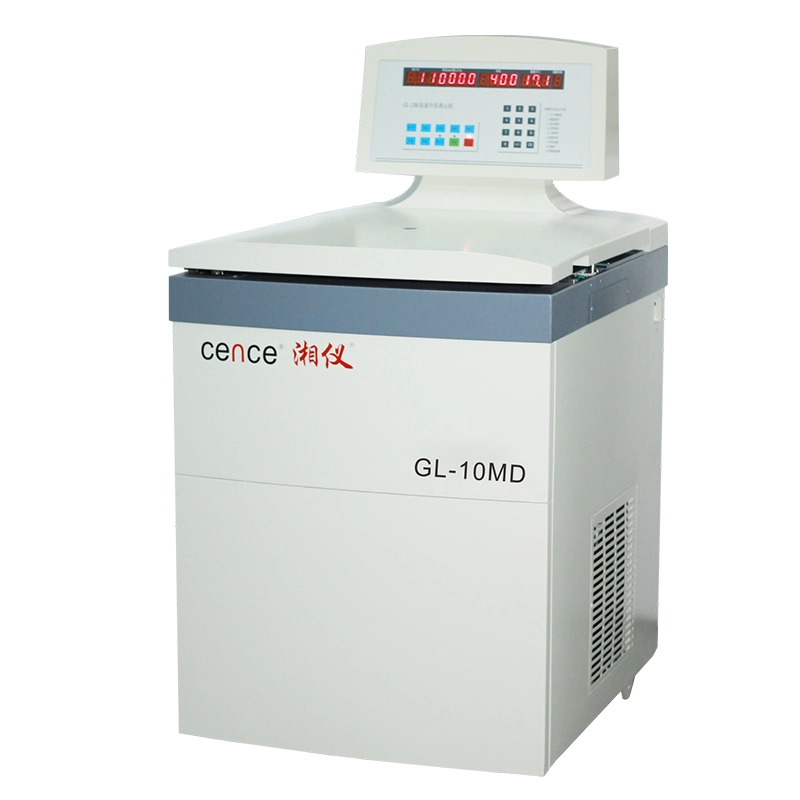
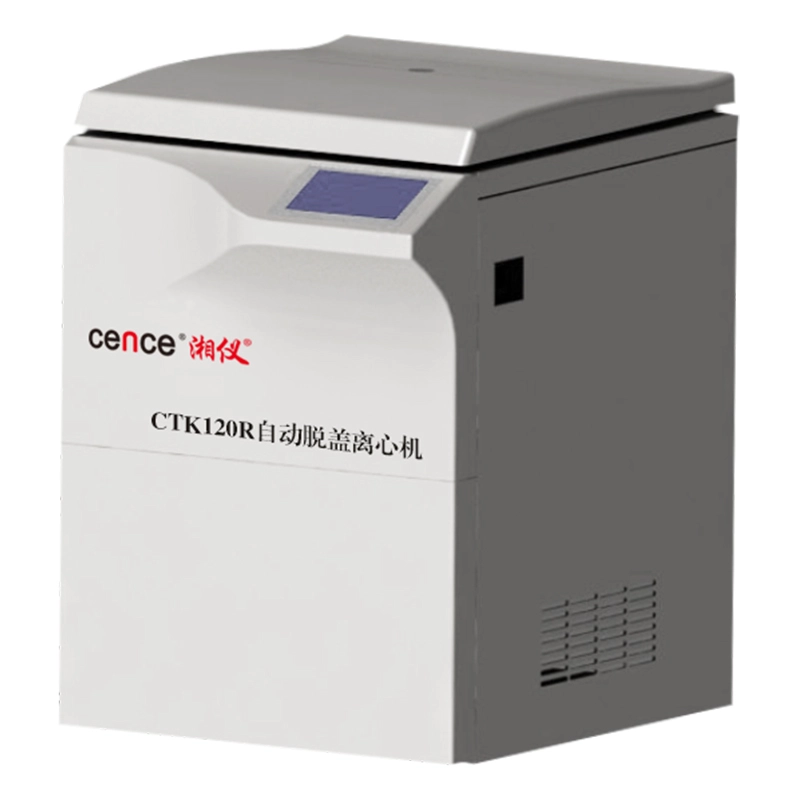
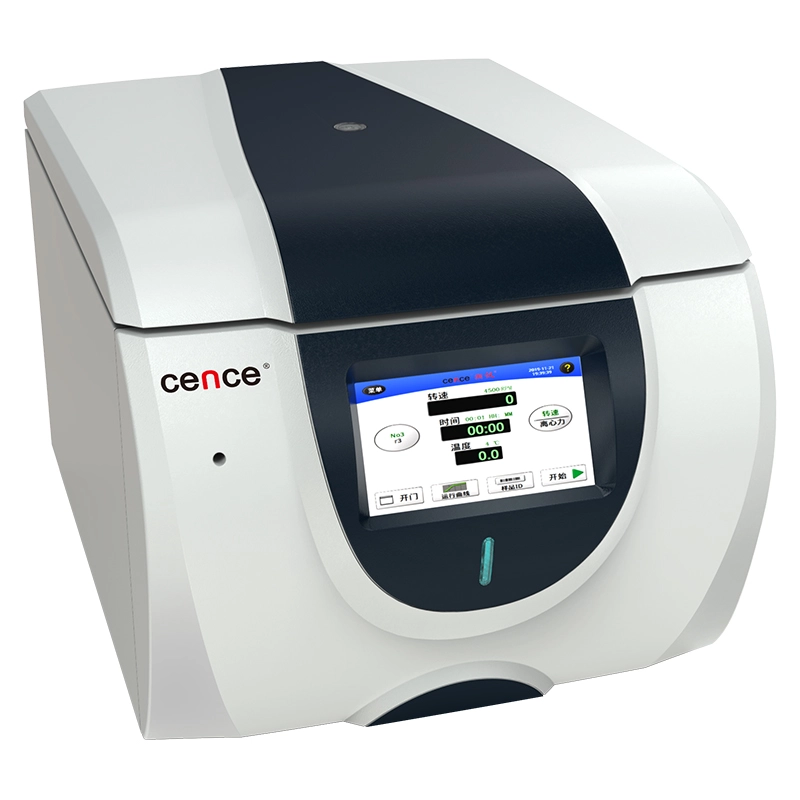
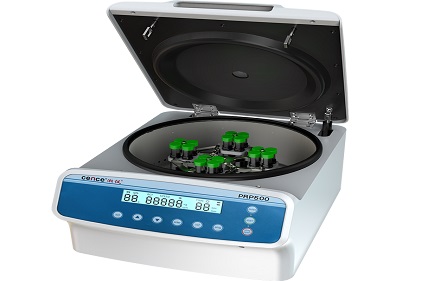
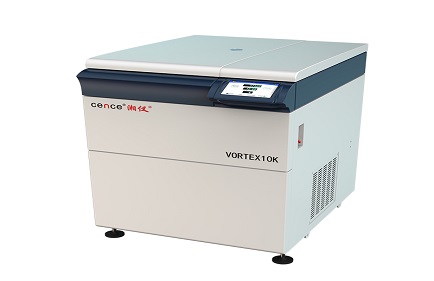
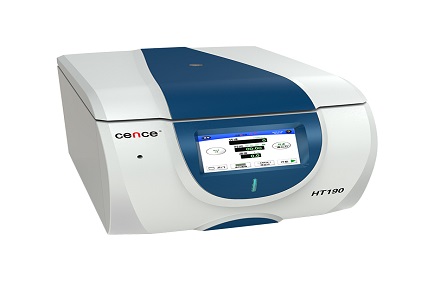
In 2026, labs are operating under compounding pressure: higher sample throughput, tighter contamination control, and faster turnaround for PCR workflows, protein preparation, and cell biology assays — with fewer resources to absorb equipment downtime or workflow bottlenecks.
Choosing the right micro centrifuge is not simply a question of maximum RPM. It is a workflow decision: which configuration matches your dominant sample format, your required RCF performance, your bench space, and your realistic throughput demands? This guide helps you compare the two options systematically and avoid the two most common purchase mistakes — under-specifying for your actual workload and over-specifying for formats you rarely use.
How Separation Performance Is Actually Determined
Understanding the working principle helps you evaluate centrifuge specifications correctly — and explains why RPM comparisons between models are often misleading.
Centrifugal separation works by applying centrifugal force to a sample, causing particles or phases to separate by density. The driving variable is relative centrifugal force (RCF), expressed in units of gravitational force (×g). RCF is determined by both rotor speed and rotor radius:
RCF = 1.118 × 10⁻⁵ × r × N²
Where r is the rotor radius in centimetres and N is the speed in RPM.
This means two centrifuges running at identical RPM produce different RCF if their rotor radii differ. A compact micro centrifuge with a small rotor radius at 14,000 RPM may generate lower RCF than a benchtop unit with a larger rotor at 12,000 RPM.
Practical implication: define your protocols by target RCF (×g) and run time, not by RPM. Then evaluate which centrifuge and rotor combination reliably achieves that RCF for your specific tube formats. This is the correct starting point for any centrifuge selection decision.
Key Specifications That Drive Centrifuge Selection
Before comparing models, define the specifications that are non-negotiable for your most frequent protocols.
| Specification | What to Define | Why It Matters |
|---|
| Maximum and minimum RCF | The RCF range required by your protocols | Ensures the centrifuge covers your full protocol range |
| Temperature control | Refrigerated (4°C or below) vs ambient | Mandatory for temperature-sensitive samples; optional for ambient workflows |
| Rotor type and capacity | Fixed-angle vs swing-bucket; tube positions per run | Fixed-angle is faster; swing-bucket needed for density gradients |
| Tube format compatibility | .2 mL, .5 mL, 1.5 mL, 2 mL, conicals, PCR strips, microplates | Verify compatibility before purchase — not all rotors accept all formats |
| Noise and vibration | Maximum acceptable dB(A) and vibration output | Critical in shared labs and open-plan spaces |
| Footprint | Available bench space including clearance requirements | Compact labs cannot absorb a large unit for primarily microtube work |
| Safety features | Imbalance detection, lid lock, rotor over-speed protection | Non-negotiable for unattended or overnight runs |
Workflow-critical features that are often overlooked:
Rotor change speed: labs with multiple protocols benefit from quick-release rotor systems
Acceleration and deceleration profiles: adjustable profiles matter for gradient preservation and pellet integrity
Imbalance detection: automatically stops the run and protects the rotor — especially important in shared equipment environments
Micro Centrifuge vs. Benchtop: Matching to Your Application

Match centrifuge choice to your dominant sample format and required RCF — this prevents overbuying and avoids daily bottlenecks.
When a Micro Centrifuge Is the Right Choice
A micro centrifuge is designed for small-format samples in a compact, high-speed platform. It is the correct primary tool when:
The majority of daily runs use .2–2.0 mL microtubes
Protocols require fast spin-downs (30 seconds to 5 minutes) rather than extended runs
Bench space is constrained
The primary workflow is nucleic acid preparation, protein spin-down, microvolume pelleting, or PCR strip processing
Refrigeration is not required (or is handled by a separate refrigerated unit)
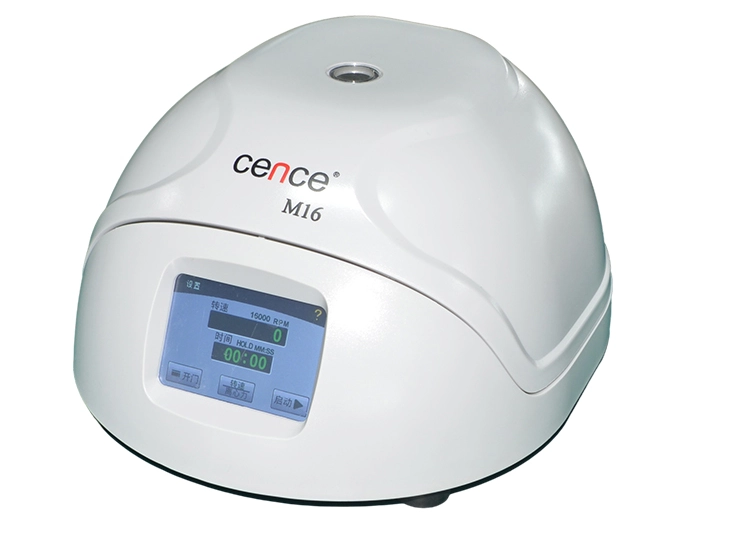
Micro centrifuges deliver their best ROI in labs where the dominant format is consistently microtubes and the required RCF is achievable within the rotor's capability. Adding a full-size benchtop unit for this workflow is an over-investment in capacity that the daily workload does not justify.
When Benchtop Centrifuge Use Makes More Sense
Benchtop centrifuge use is better suited when the lab needs:
Regular processing of multiple tube formats in the same workflow (1.5 mL microtubes and 15/50 mL conicals in the same session)
Refrigeration for temperature-sensitive samples (cell pellets, enzyme preparations, labile proteins)
Higher throughput per run — more tube positions per cycle
Swing-bucket rotor capability for density gradients or plate-based applications
A single instrument that serves multiple users with different protocol needs

The benchtop unit becomes the right choice when trying to cover microtube-only workflows with it is the over-specification risk — the unit costs more, occupies more space, and provides capabilities that the actual workload does not use.
Decision Logic Summary
| Workflow Characteristic | Micro Centrifuge | Benchtop Centrifuge |
|---|
| Dominant format | 0.2–2.0 mL microtubes | Mixed: microtubes + conicals + plates |
| Run frequency | High-frequency, short-duration spins | Mixed duration; includes extended runs |
| Temperature control | Not required (or separate unit) | Refrigeration needed for sample sensitivity |
| Throughput per run | Low-to-medium (8–24 positions typical) | Medium-to-high (multiple rotors, higher position count) |
| Protocol diversity | Narrow, consistent | Broad and variable across users |
| Budget and footprint | Cost-sensitive, space-constrained | Justify full-feature investment with diverse workload |
Rule of thumb: if 80% or more of daily runs use microtubes at ambient temperature, a micro centrifuge is the primary instrument. If the lab regularly handles multiple tube formats or temperature-sensitive protocols, a benchtop centrifuge with rotor flexibility is the more productive choice.
How to Select the Right Configuration for Your Lab
Step 1 — Define Protocols by RCF, Not RPM
List each protocol with its required RCF (×g), run time, and sample temperature requirement. Identify the minimum and maximum RCF across your full protocol set. This is the specification that any centrifuge must meet — it cannot be inferred from RPM alone.
Step 2 — Define Sample Formats and Capacity Requirements
List every tube format used in your lab: 0.2 mL PCR tubes, 0.5 mL, 1.5 mL, 2.0 mL microtubes, 15 mL and 50 mL conicals, microplates. Identify the maximum number of tubes you need to process per run at peak throughput. This defines the rotor capacity requirement.
Step 3 — Decide on Refrigeration
Temperature-sensitive samples — including certain cell pellets, RNA preparations, and labile enzymes — require centrifugation at 4°C or below. If any of your protocols have this requirement, refrigeration is non-negotiable. If all protocols run at ambient temperature, non-refrigerated units are appropriate and lower cost.
Step 4 — Confirm Physical and Infrastructure Requirements
Available bench space with required clearance for ventilation and safe operation
Electrical supply: voltage, phase, and amperage for the unit's power rating
Noise limitations: open-plan labs may require units below 55–60 dB(A) during operation
Biosafety placement requirements if handling infectious or hazardous samples
Step 5 — Procurement Checklist
| Requirement | What to Confirm |
|---|
| Rotor compatibility | Are the rotors you need available for this model? What is the lead time for additional rotors? |
| Safety certifications | Imbalance detection, lid-lock mechanism, over-speed protection, rotor certification |
| Warranty and service | Warranty period, local service capability, spare parts availability |
| Calibration support | Is calibration documentation available for regulatory or accreditation requirements? |
Total Cost of Ownership: What Labs Often Underestimate
The purchase price of a micro centrifuge or benchtop unit is only one component of the total cost.
| TCO Driver | How It Accumulates | How to Manage It |
|---|
| Rotor lifecycle | Rotors have defined service lives and require periodic inspection; worn rotors are a safety risk | Follow manufacturer inspection schedule; document rotor run hours |
| Downtime cost | Equipment failure during peak workflows causes downstream delays and rerun costs | Choose units with known reliability records and available local service |
| Maintenance labor | Cleaning, decontamination, calibration checks consume technical time | Define a maintenance schedule at installation; assign responsibility in shared labs |
| Replacement parts lead time | Critical parts unavailable for weeks creates extended downtime | Confirm parts availability and lead time before purchase, especially for shared equipment |
| Cleaning and decontamination | Protocol-dependent; some samples require validated decontamination between runs | Confirm recommended cleaning agents do not damage rotor or chamber materials |
Operational Best Practices
Inspect rotors for cracks, corrosion, and excessive wear at defined intervals — do not wait for visible failure
Always balance loads correctly — even small imbalances at high RCF create vibration that accelerates bearing wear
Use only cleaning agents validated for the specific rotor material (aluminium vs carbon fibre vs stainless steel)
In shared labs, log runs per rotor to track against the manufacturer's stated rotor lifetime
FAQs
Q1: What is a micro centrifuge and what is it designed for?
A micro centrifuge is a compact, high-speed centrifuge optimised for processing small-format samples — primarily 0.2 to 2.0 mL microtubes — in routine molecular biology and microvolume sample preparation workflows. It is designed for fast spin-downs, small bench footprint, and high-frequency use in protocols such as nucleic acid precipitation, protein spin-down, and microvolume pelleting. It is not designed for larger conical tubes or temperature-controlled applications without a specifically configured model.
Q2: What is the key functional difference between a micro centrifuge and a benchtop centrifuge?
A micro centrifuge is optimised for one format range — microtubes — in a compact, high-RPM platform. Benchtop centrifuge use covers a broader range of tube formats and rotor types, typically includes refrigeration options, and is designed for labs with diverse or higher-volume workflows. The benchtop unit provides more flexibility at higher cost and larger footprint; the micro centrifuge provides speed and simplicity for microtube-dominant workflows at lower cost and smaller bench space.
Q3: How do I calculate ROI when choosing between these two options?
Estimate time saved per day from better capacity match: fewer queues at shared equipment, fewer rerun events from protocol mismatch, and reduced downtime from equipment better suited to the workload. Multiply daily time saved by labor cost per minute and by the number of working days per year. Compare this against the price difference between the two options. For most labs with clear dominant formats, the correct-sized instrument pays back within one to two quarters through reduced bottlenecks and reruns.
Q4: Are any lab modifications needed to install a micro centrifuge or benchtop unit?
Most installations require no major modifications. Confirm available bench space with required clearance (typically 15–20 cm on all sides for ventilation), verify the electrical supply matches the unit's rated voltage and amperage, check noise output against any open-plan lab limits, and confirm any biosafety placement requirements for the sample types being processed. Refrigerated benchtop units may have additional ventilation requirements specified by the manufacturer.
Q5: What parameters should I provide for an accurate centrifuge selection and quotation?
Provide: required RCF range (×g) for all protocols, sample temperature requirements (refrigerated or ambient), tube formats and positions per run, expected daily run volume and number of users, rotor type preferences (fixed-angle, swing-bucket, PCR strip, microplate), available bench space, electrical supply specification, noise or biosafety constraints, and any current problems with existing equipment such as insufficient capacity, imbalance errors, or rotor limitations.
Ready to Select the Right Centrifuge for Your Lab?
The right micro centrifuge or benchtop unit is the one that matches your dominant sample format, your required RCF performance, and your realistic throughput demands — without paying for capacity or features your protocols do not use. Define RCF targets and sample formats first, then select the configuration that minimises daily bottlenecks and total cost of ownership.
Explore options at cencelab.com/products/benchtop-centrifuge and submit your sample types, temperature requirements, tube formats, capacity per run, required RCF, and current equipment problems to receive a recommended configuration and quotation.
 English
 한국어
한국어 français
 Deutsch
 Español
 italiano
 русский
 português
 العربية
 tiếng việt
 Indonesia